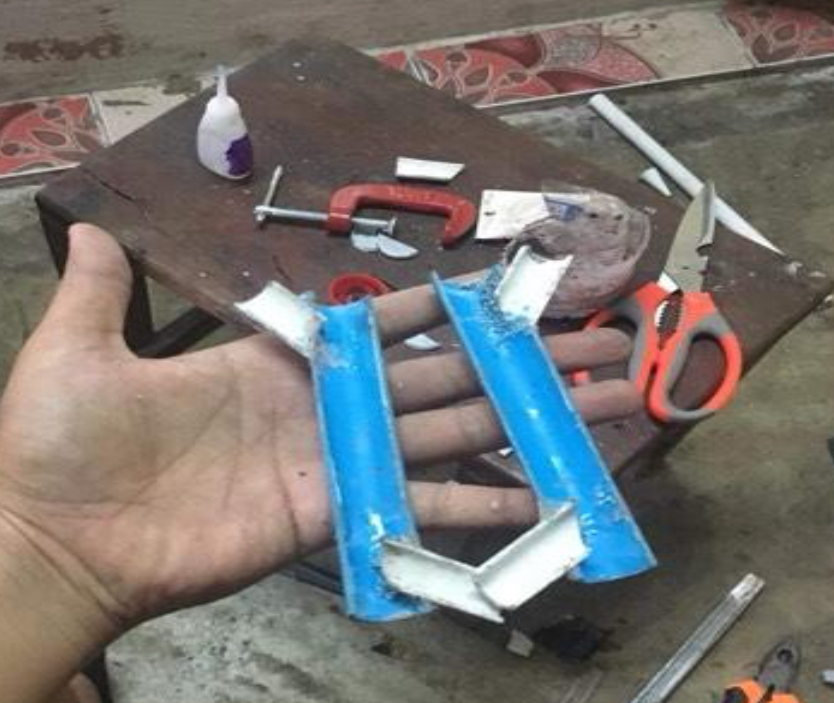
อุปกรณ์ระบายความร้อนของเครื่องปรับอากาศแบบแยกส่วนด้วยน้ำทิ้งจากชุดคอยล์เย็น
บทคัดย่อ/Abstract
<p dir="ltr" id="docs-internal-guid-5600d942-dfc0-276b-3e1f-581404d0360b" style="caret-color: rgb(0, 0, 0); color: rgb(0, 0, 0); -webkit-tap-highlight-color: rgba(26, 26, 26, 0.3); -webkit-text-size-adjust: auto; line-height: 1.2; text-indent: 36pt; text-align: justify; margin-top: 0pt; margin-bottom: 0pt;"><span style="font-size: 16pt; font-family: Sarabun, sans-serif; font-variant-ligatures: normal; font-variant-alternates: normal; font-variant-numeric: normal; font-variant-east-asian: normal; font-variant-position: normal; vertical-align: baseline; white-space: pre-wrap;">งานวิจัยนี้มีวัตถุประสงค์เพื่อศึกษาประสิทธิภาพของอุปกรณ์ระบายความร้อนของเครื่องปรับอากาศแบบแยกส่วนด้วยน้ำทิ้งจากชุดคอยล์เย็นสำหรับเครื่องปรับอากาศแบบแยกส่วนขนาด 9,000 btu จำนวน 2 เครื่องที่ใช้งานในห้องขนาดกว้าง 4.50 เมตร ยาว 5.70 เมตร และสูง 3 เมตร โดยใช้น้ำทิ้งจากคอยล์เย็นมาหล่อเย็นท่อดิสชาร์จเพื่อลดอุณหภูมิของสารทำความเย็นก่อนที่จะที่ไหลสู่เครื่องควบแน่น ซึ่งได้ออกแบบการทดลองเป็น 4 การทดลองเพื่อเปรียบเทียบการใช้พลังงานไฟฟ้า คือ การทดลองที่ 1 เป็นการทดลองเครื่องปรับอากาศที่ยังไม่ได้ติดตั้งอุปกรณ์ระบายความร้อนของเครื่องปรับอากาศแบบแยกส่วนด้วยน้ำทิ้งจากชุดคอยล์เย็น การทดลองที่ 2 เป็นการทดลองเครื่องปรับอากาศที่ติดตั้งอุปกรณ์ระบายความร้อนของเครื่องปรับอากาศแบบแยกส่วนด้วยน้ำทิ้งจากชุดคอยล์เย็นแบบที่ 1 ภายในท่อดิสชาร์จจะติดตั้งขดลวดชะลอการไหลของน้ำ การทดลองที่ 3 เป็นการทดลองเครื่องปรับอากาศที่ติดตั้งอุปกรณ์ระบายความร้อนของเครื่องปรับอากาศแบบแยกส่วนด้วยน้ำทิ้งจากชุดคอยล์เย็นแบบที่ 2 ภายในท่อดิสชาร์จจะติดตั้งฟองน้ำชะลอการไหลของน้ำ และการทดลองที่ 4 เป็นการทดลองเครื่องปรับอากาศที่ติดตั้งอุปกรณ์ระบายความร้อนของเครื่องปรับอากาศแบบแยกส่วนด้วยน้ำทิ้งจากชุดคอยล์เย็นแบบที่ 3 ภายในท่อดิสชาร์จจะไม่มีวัสดุที่ใช้ชะลอการไหลของน้ำ การแลกเปลี่ยนความร้อนของอุปกรณ์ตัวนี้น้ำจะท่วมท่อดิสชาร์จ และจะล้นนำความร้อนออกมา </span></p><p dir="ltr" style="caret-color: rgb(0, 0, 0); color: rgb(0, 0, 0); -webkit-tap-highlight-color: rgba(26, 26, 26, 0.3); -webkit-text-size-adjust: auto; line-height: 1.2; text-indent: 36pt; text-align: justify; margin-top: 0pt; margin-bottom: 0pt;"><span style="font-size: 16pt; font-family: Sarabun, sans-serif; font-variant-ligatures: normal; font-variant-alternates: normal; font-variant-numeric: normal; font-variant-east-asian: normal; font-variant-position: normal; vertical-align: baseline; white-space: pre-wrap;">จากการทดลองทำให้เห็นว่าการเปรียบเทียบผลการทดลองของเครื่องปรับอากาศทั้ง 4 การทดลองขณะที่เครื่องปรับอากาศทำงานเต็มที่ การทดลองที่ 1 ใช้ไฟฟ้าที่ 64.3 หน่วย คิดเป็นเงิน 208.87 บาท การทดลองที่ 2 ใช้ไฟฟ้าที่ 61.6 หน่วย คิดเป็นเงิน 200.10 บาท สามารถประหยัดพลังงานได้ 4.19 เปอร์เซ็นต์ การทดลองที่ 3 ใช้ไฟฟ้าที่ 59.1 หน่วย คิดเป็นเงิน 191.98 บาท สามารถประหยัดพลังงานได้ 8.08 เปอร์เซ็นต์ และการทดลองที่ 4 ใช้ไฟฟ้าที่ 57.9 หน่วย คิดเป็นเงิน 188.08 บาท สามารถประหยัดพลังงานได้ดีที่สุด 9.95 เปอร์เซ็นต์</span></p><p dir="ltr" id="docs-internal-guid-33a1a280-dfc0-5572-f926-c2a0a7672720" style="caret-color: rgb(0, 0, 0); color: rgb(0, 0, 0); -webkit-tap-highlight-color: rgba(26, 26, 26, 0.3); -webkit-text-size-adjust: auto; line-height: 1.2; text-align: justify; margin-top: 0pt; margin-bottom: 0pt;"><span style="font-size: 16pt; font-family: Sarabun, sans-serif; font-variant-ligatures: normal; font-variant-alternates: normal; font-variant-numeric: normal; font-variant-east-asian: normal; font-variant-position: normal; vertical-align: baseline; white-space: pre-wrap;">The objective of this research is study about analysis and design the efficiency of heat ventilation equipment for split-type air-conditioner using drained water of cooling coil. In experimental, 2 air conditioner 9,000 btu are using in a room 4.5 m width 5.7 m long and 3 m high. Heat ventilation system using drained water of cooling coil flow through discharge tube for reduce refrigerant temperature before the condenser unit. In this study has been divided into 4 part are experiment 1 is normal operation of air-conditioner, experiment 2 is installed heat ventilation for split-type air-conditioner type 1 in discharge tube using coil pipe heat exchanger for slow down cool water as flow through discharge tube , experiment 3 is installed heat ventilation for split-type air-conditioner type 2 in discharge tube using sponge pipe heat exchanger for slow down cool water as flow through discharge tube, experiment 4 is installed heat ventilation for split-type air-conditioner type 3 in discharge tube using overflow pipe heat exchanger for slow down cool water as flow through discharge tube.</span></p><p dir="ltr" style="caret-color: rgb(0, 0, 0); color: rgb(0, 0, 0); -webkit-tap-highlight-color: rgba(26, 26, 26, 0.3); -webkit-text-size-adjust: auto; line-height: 1.2; text-indent: 36pt; text-align: justify; margin-top: 0pt; margin-bottom: 0pt;"><span style="font-size: 16pt; font-family: Sarabun, sans-serif; font-variant-ligatures: normal; font-variant-alternates: normal; font-variant-numeric: normal; font-variant-east-asian: normal; font-variant-position: normal; vertical-align: baseline; white-space: pre-wrap;"></span></p><p dir="ltr" style="caret-color: rgb(0, 0, 0); color: rgb(0, 0, 0); -webkit-tap-highlight-color: rgba(26, 26, 26, 0.3); -webkit-text-size-adjust: auto; line-height: 1.2; text-align: justify; margin-top: 0pt; margin-bottom: 0pt;"><span style="font-size: 16pt; font-family: Sarabun, sans-serif; font-variant-ligatures: normal; font-variant-alternates: normal; font-variant-numeric: normal; font-variant-east-asian: normal; font-variant-position: normal; vertical-align: baseline; white-space: pre-wrap;"> The comparison of 4 experiments as full load operation could conclude that in experimental 1, 2 ,3 and 4 used electric energy 64.3 unit (208.87 baht), 61.6 unit (200.10 baht), 59.1 unit (191.98 baht) and 57.9 unit (188.08 baht), respectively. In term of percentage, Experimental 2 ,3 and 4 can save energy 4.19%, 8.08% and 9.95% as compared to experimental 1, respectively, </span></p>